Auto-Rotating vs Manual: Comparing Outdoor Gas Pizza Oven Models
Few things beat a fresh backyard pizza with a leopard-spotted crust. But before you get there, you face a decision that shapes every cook: do you want the oven to turn the pizza for you, or do you want the hands-on control of rotating it yourself? Auto-rotating and manual outdoor gas pizza ovens both promise that 90-second, restaurant-quality bake — yet they take very different paths to get there.
This comparison walks through what actually matters: how evenly each one bakes, how long it takes to learn, what you’ll pay, and how much upkeep each design demands.
How Each Design Works
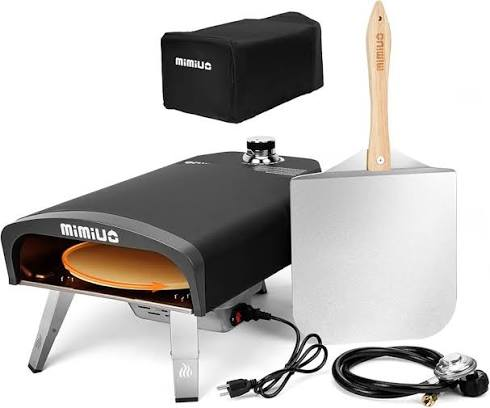
In an auto-rotating model, the pizza stone spins on a motor-driven turntable while the burner — usually at the back or side — fires continuously. Every part of the pie takes its turn near the flame, so you can launch and step back while it cooks, typically in 60–120 seconds.
A manual oven gives you a static stone and one job: turn the pizza yourself. Launch the pie, wait 20–30 seconds, slide your turning peel under it, rotate a quarter turn, and repeat. Same burner placement, but no motor and no turntable — just heat, stone, and your timing.
Evenness of Bake: Consistency vs. Control
Here’s where the auto-rotating design earns its keep. Because the stone turns at a constant speed, every edge of the crust spends exactly the same time near the flame — golden edges all around, a consistently puffed cornicione, and a base that chars evenly rather than scorching on one side.
Manual ovens can match that result, but only through skill. A seasoned pizza maker with good peel technique will produce pies that are just as beautiful — arguably better, because they can read the dough in real time. If one side is blistering faster, they can give that edge less flame time. That responsiveness is something no motor can replicate. The trade-off is that beginners will have a few lopsided pizzas on the way there.
In short: auto-rotating gives you consistency out of the box, while manual gives you a higher ceiling once you’ve learned the craft. Cooking for a party of ten where every pie should look the same? Automation is your friend. Chasing the perfect bake as a hobby? Hands-on control rewards the effort.
Learning Curve: Set-and-Forget vs. Skill-Building
For a first-time outdoor pizza cook, an auto-rotating model is the gentler introduction. Launch the pizza, watch the stone turn, pull it out when it’s done. No peel rotations to time, no worrying about tearing the dough mid-turn. Most people produce respectable pizzas on their very first session, which makes it a great fit if you also want to enjoy your own party instead of babysitting the oven.
Manual ovens ask more of you upfront. Launching onto a static stone, judging when to turn, sliding a peel under soft, hot dough without disturbing the toppings — it’s a real technique that takes a few sessions to dial in. But once the motion becomes muscle memory, it feels as natural as flipping a burger.
A rotating pizza oven with an auto-turning deck is the obvious pick if you want great results on day one, while manual models reward the cook who treats pizza night as a hobby worth practicing.
Price: What You’re Paying For
Automation costs money. Auto-rotating models typically run more expensive because of the motor assembly, the turntable mechanism, and the extra engineering that keeps everything working at 900°F-plus. You’re paying for convenience — and for parts precision-built to survive repeated high-heat cycles.
Manual ovens are mechanically simpler, which keeps prices friendlier. There’s less to break and less to engineer, so you often get comparable burner power and stone quality for less money. For budget-conscious buyers, a manual oven paired with a decent turning peel is an excellent value: you trade a little effort for a meaningful discount.
Maintenance and Durability
This is where simplicity becomes a feature. A manual oven is essentially burner, stone, and shell. Cleaning means brushing down the stone, wiping debris from the floor, and occasionally checking the gas connection. Very little can mechanically fail.
Auto-rotating ovens add a motor and drive system that live in a harsher environment than a static stone. Practical care is straightforward — keep crumbs and flour out of the drive mechanism, let the oven cool before covering it, and check that the stone seats properly on the turntable — but it’s one more thing on the list.
What to Watch For
Regardless of style, a few habits extend any gas pizza oven’s life: preheat fully before the first launch, never put water on a hot stone (thermal shock cracks them), and store the oven covered to keep burner ports clear of debris. If you own the auto-rotating type and plan to run it near other gear — say a propane camping stove on the same trip — give the motor drive a quick inspection at the start of the season.
Who Benefits From Automation — and Who Prefers Hands-On Control
Choose auto-rotating if:
- You cook for groups and want consistent results across many pies
- You’re new to pizza making and want success on your first cook
- You’d rather socialize than manage peel rotations
- Even, hands-off baking matters more than artisanal control
Choose manual if:
- You enjoy the craft and want to master traditional technique
- You want the most responsive control over flame exposure
- Simplicity and fewer mechanical parts appeal to you
- You’d rather spend less and invest effort instead
The Bottom Line
Neither design is objectively better — they serve different cooks. Auto-rotating outdoor gas pizza ovens deliver even, repeatable results with almost no learning curve, making them ideal for beginners, entertainers, and anyone who values convenience. Manual ovens offer a lower price, simpler maintenance, and the kind of hands-on control that dedicated pizza makers eventually prefer.
The best question isn’t “which bakes better?” — both bake beautifully in the right hands. It’s “how do I want pizza night to feel?” If the answer is relaxed and effortless, let the stone do the turning. If the answer is engaged and skill-driven, grab a peel and take control. Either way, you’re about to eat very well.