
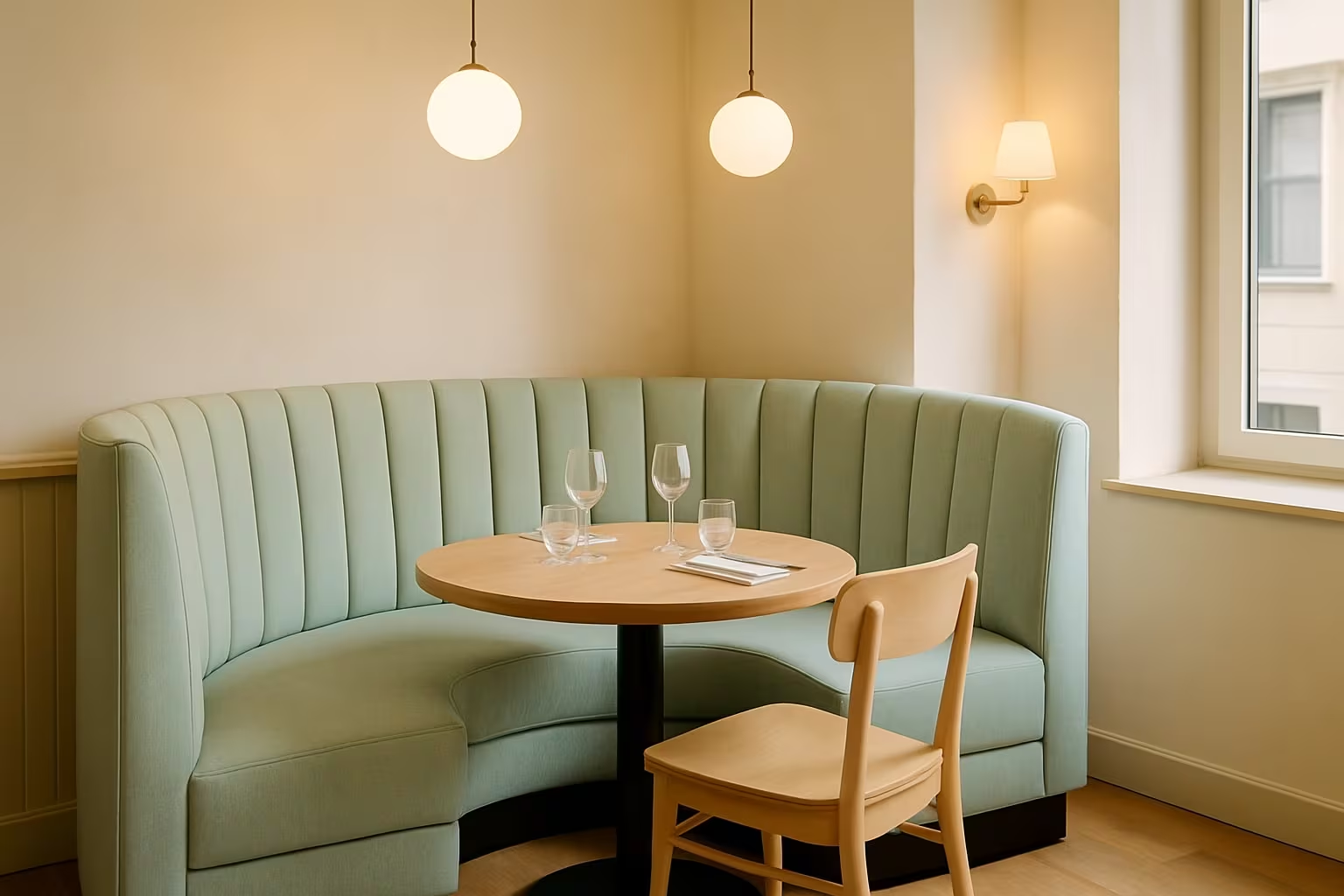
Making Room in Restaurant Booths When the Dinner Group Gets Bigger
The reservation is confirmed, and the booth is ready. Then a message arrives: another friend is coming. Someone else soon asks whether there is room. The group sees a more sociable evening taking shape. The restaurant now has to reconsider comfort, table space, and the arrangement around a booking that once seemed straightforward.
Planning restaurant booths for changing groups starts with a clear understanding of what each arrangement can accommodate. A long cushion can look inviting while the tabletop, access point, or service route sets a tighter practical limit. Hosts need that information before the group arrives, along with an alternative that lets them welcome an extra guest without promising a place that does not work.
Count a usable place at the table
A seating capacity should describe a person who can take part in the meal, not simply a body that can fit on a bench. Consider where that guest puts a plate, rests their arms, and places their feet. The table base may limit a position that looks available from above.
Test the booth with the restaurant’s actual place settings. Shared dishes need different tabletop space from a quick meal on individual trays. Water, condiments, and decorations take up space too. Record an arrangement that accommodates the service the restaurant actually provides.
Try getting into and out of the booth while others remain seated. An extra guest may mean everyone has to shift whenever someone gets up. The same arrangement might work well for one type of booking and feel awkward for another.
Do not publish a maximum that staff must reinterpret later. If an acceptable arrangement requires removing table items or changing the menu, explain those conditions when taking the booking.
Expect the conversation to begin elsewhere
Social plans often develop before anyone contacts the restaurant. A group chat can leave an invitation open-ended, so the person booking may not yet know the final headcount. Ask for the current number and explain when the restaurant needs confirmation.
Pew Research Center’s report published in 2023 found that three in ten U.S. adults had used a dating site or app. That research into online connections concerns dating, not restaurant party sizes. It does show why an in-person welcome may follow a conversation that began on a screen.
Keep booking questions practical and respectful. Staff need not ask how people met. They need the number of places, expected arrival pattern, and any seating requests. Collect that information without turning a casual dinner into an interview.
Some groups may be turning friendships formed online into their first shared meal. The linked article describes how conversations around common interests can develop into ongoing friendships. For the host, the useful detail is the group’s arrival plan, not an account of the platform or community where they met.
Offer a real alternative to squeezing in
A quick yes at the door can make the meal difficult. A chair added to the end of a booth may obstruct a route or put its occupant against the table base. Offer that position only after checking that it belongs to an approved, usable arrangement.
Prepare alternatives the host can explain clearly:
- Move the whole party to a suitable larger setting.
- Offer nearby tables if the guests accept that arrangement.
- Suggest another booking time when the right space is available.
The group should understand the difference between those choices. Nearby tables are not the same experience as a shared booth, and a guest at a separate setting should not discover that fact only after arriving.
A calm explanation helps. “That booth works for the number that you booked; this table gives the larger group room to eat together” describes the practical issue. It avoids making the late addition sound like a personal inconvenience.
Make joining the group easy
Plan for separate arrivals even when the headcount is unchanged. Give the host a simple way to recognize the reservation and tell guests how to find their group. Avoid announcing unnecessary personal details across the room.
People meeting someone new may choose a restaurant partly because it is a public setting. RAINN includes public meeting places in its safer-dating guidance. A venue can support a clear arrival and a visible staff presence without presenting furniture as a guarantee of personal safety.
Look at the booth’s position relative to the entrance and host stand. Guests should reach it without walking through work areas or disturbing several other parties. Staff also need a practical route for checking on the group once everyone is seated.
For gatherings with a long arrival window, explain how ordering will work. The host should not have to keep rearranging the booth every time a person appears. A clear service plan gives late arrivals a place in the evening without making the already seated guests start again.
Keep access part of the gathering
A larger party still contains individual needs. Ask about access requirements as matter-of-factly as any other seating preference. Provide an arrangement that works for the person instead of presuming every guest can slide along a bench.
The U.S. Access Board includes booths in its guidance on accessible dining arrangements. Appropriate approaches and space beneath the dining surface still matter when fixed seating defines the venue’s appearance. Apply the relevant requirements to the actual plan, with qualified assistance where needed.
Plan for coats and bags as well. Belongings left on an empty cushion may end up in the aisle when another guest arrives. Identify a suitable storage place before filling the booth to its intended capacity.
Communicate these arrangements to the service team. If a table was changed for an access need, another employee should not restore the default layout merely because it looks different. A brief reservation note can prevent a well-meant adjustment from undoing that work.
Leave room for the dinner itself
After the booking, record what the restaurant learned. Perhaps the booth worked well for a shared-plate menu, or the alternative table gave the group a better evening than the setting they first requested. Use those observations to refine the booking description and staff guidance, without collecting private details about the guests.
A social dinner has plenty of moving parts already. The restaurant can make its role dependable by explaining capacity clearly and offering workable alternatives. A welcoming answer gives everyone a proper place at the meal, including the friend who joined the conversation last.